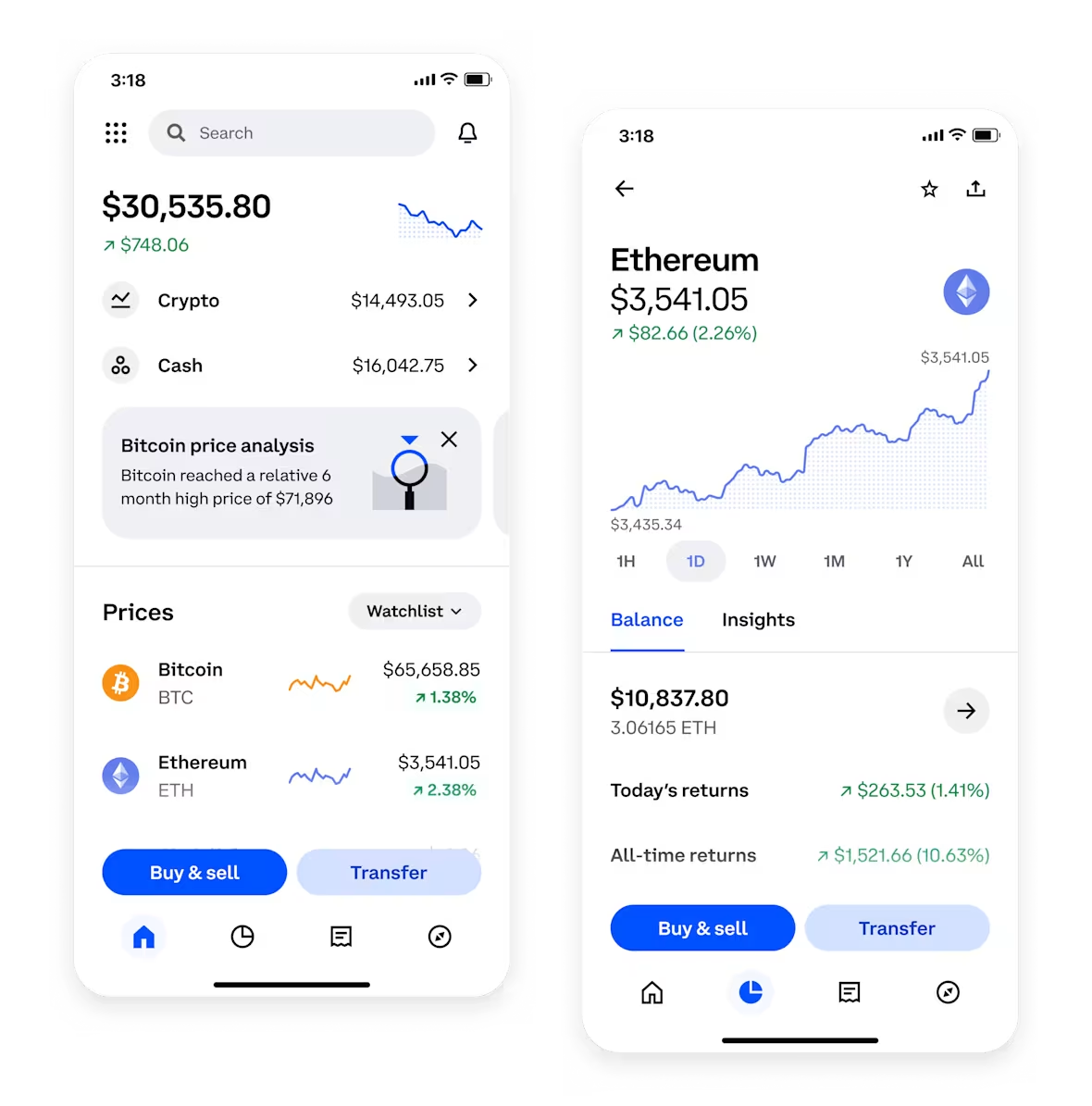

When entering the world of cryptocurrency trading, two names often stand out: Huobi and Binance. Both are among the most established centralized exchanges globally, yet each has its own interface, features, and operational nuances. Understanding how to operate these platforms is essential for any trader, from complete beginners to experienced users. This guide provides a clear, step-by-step breakdown of how to use both Huobi and Binance exchanges.
First, account registration and security setup form the foundation. For Huobi, visit the official website or download the app. Click "Sign Up" and enter your email or phone number. You will need to create a strong password and complete a verification code sent to your contact method. For Binance, the process is similar. After registration, the most critical step is enabling two-factor authentication (2FA). Both exchanges support Google Authenticator and SMS verification. Activating 2FA significantly reduces the risk of unauthorized account access.
Next, the deposit process varies slightly. On Huobi, navigate to "Assets" and then "Deposit." You will see a list of supported cryptocurrencies. Select the coin you wish to deposit (e.g., Bitcoin, Ethereum, or USDT). The system generates a unique deposit address. Copy this address and paste it into your external wallet or other exchange. On Binance, go to "Wallet," then "Fiat and Spot," and click "Deposit." Binance offers a broader selection of deposit options, including fiat currency via bank transfers or credit cards. Always double-check that the network you are using (e.g., ERC-20 for Ethereum, BEP-20 for Binance Smart Chain) matches both the sending and receiving platform to avoid losing funds.
Trading is the core function. On Huobi, the trading interface is divided into two main sections: a spot trading view and a derivatives view. For beginners, spot trading is recommended. Click "Exchange" and choose "Spot." Select a trading pair, such as BTC/USDT. The order book displays buy and sell orders. You can place a "Limit Order" (set a specific price) or a "Market Order" (buy or sell immediately at the current market price). Huobi also offers "Stop-Limit" orders for risk management. On Binance, the trading interface is more advanced but user-friendly. After logging in, click "Trade" and select "Classic" or "Advanced" view. Binance offers a similar order book system but also includes features like "OCO" (One Cancels the Other) orders. Both platforms allow you to set leverage for futures trading, but this is high-risk and not recommended for beginners.
Fee structure is another key differentiator. Huobi typically charges a maker/taker fee of around 0.2% per trade, with reductions for holding their native token (HT). Binance is known for its lower fees, starting at 0.1% for maker and taker. Users can also reduce fees by paying with Binance Coin (BNB). For high-volume traders, both exchanges offer VIP tiers with additional discounts.
Withdrawing funds follows the deposit process in reverse. On Huobi, go to "Assets" and "Withdraw." Enter the amount and destination address. A security verification (email or SMS code plus 2FA) is required. Binance has a similar withdrawal flow, but users must whitelist withdrawal addresses for added security. Withdrawal fees vary by cryptocurrency and network congestion.
Both exchanges also offer mobile apps, staking services, and launchpads for new tokens. Huobi users often appreciate its robust customer support and regulatory compliance in certain jurisdictions. Binance users benefit from its massive liquidity, extensive coin listings, and educational resources like Binance Academy. However, Binance has faced more regulatory scrutiny in some countries, which may affect access.
In summary, operating Huobi and Binance requires careful attention to security during registration, precise execution during deposits and withdrawals, and a clear understanding of trading pairs and fee structures. Beginners should start with small amounts on spot markets, use limit orders to control entry prices, and gradually explore advanced features like futures or margin trading only after mastering the basics. Always keep your private keys secure and stay updated on each exchange's evolving policies.