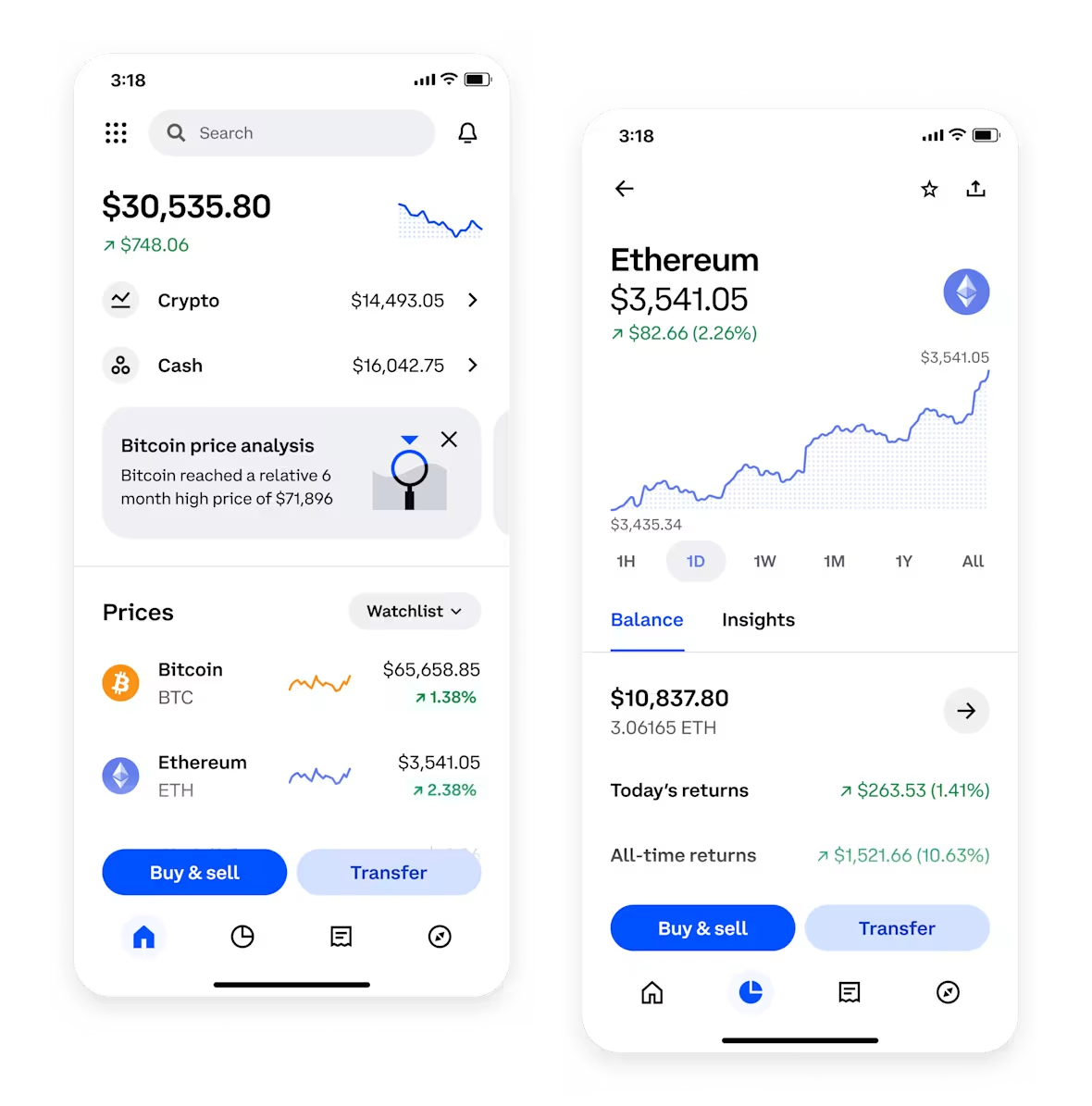

Navigating the world of cryptocurrency trading begins with understanding how major platforms like Binance, Huobi (now often rebranded or merged), and other well-known exchanges operate. For beginners, the process can seem complex, but the core steps are similar across these platforms. This guide breaks down the essential operations for using top-tier crypto exchanges effectively.
Step 1: Registration and Account Verification
The first step to operate Binance, Huobi, or any regulated exchange is creating an account. You will need to provide a valid email address or phone number. Following registration, most exchanges require Identity Verification (KYC - Know Your Customer). This involves uploading a government-issued ID (passport or driver’s license) and sometimes a selfie. Without completing basic verification, your withdrawal limits will be severely restricted, and you cannot use fiat currency (like USD or EUR) to buy crypto. For example, on Binance, after verification, you can deposit funds via bank transfer or credit card.
Step 2: Depositing Funds
Once your account is active, you need to fund it. There are two primary methods:
- **Fiat Deposits:** On Binance and Huobi, you can use P2P trading (peer-to-peer) or direct card purchases to convert your local currency into USDT, BTC, or ETH. This is the most common entry point for new users.
- **Crypto Deposits:** If you already own crypto (e.g., from another wallet), go to “Deposit” in the exchange, select the specific coin (e.g., Bitcoin), and the system will generate a wallet address. Copy this address exactly and paste it into the sending wallet. Always double-check the network (e.g., ERC-20 for Ethereum tokens) to avoid losing funds.
Step 3: Spot Trading vs. Advanced Tools
The core operation is Spot Trading, which is buying and selling cryptocurrency at the current market price.
- On Binance, you typically see a “Basic” and “Advanced” trading interface. Beginners should stick to “Basic” to place simple Market orders (buy immediately at the best price) or Limit orders (buy only when the price reaches your target).
- Huobi offers a similar interface. The key difference is the trading pairs. For example, you might trade BTC/USDT or ETH/BTC. Always ensure you are trading the correct pair.
- Advanced operations include Margin Trading (borrowing funds to trade larger amounts) and Futures Trading (speculating on price movements with leverage). These carry high risk and are not recommended for new users. Binance and Huobi both have strict warnings before enabling these modes.
Step 4: Security Operations
Operating an exchange securely is non-negotiable. Both Binance and Huobi require you to set up two-factor authentication (2FA) via Google Authenticator or SMS. Never rely on SMS alone as it can be vulnerable to SIM-swapping attacks. Additionally, use the “Anti-Phishing Code” feature: the exchange will include a unique code in all its official emails to you, helping you identify fake emails. You should also whitelist withdrawal addresses: this means you can only withdraw funds to addresses you have pre-approved, preventing hackers from sending your assets to unknown wallets.
Step 5: Withdrawing Crypto
To move your assets off the exchange to a personal wallet (like MetaMask or a hardware wallet), go to “Withdraw”. Enter the destination wallet address and the network type. A critical operation error here is choosing the wrong network. For example, if you withdraw USDT using the TRC-20 network but your wallet only supports ERC-20, the funds will be lost. Binance and Huobi both display network fees per coin; TRC-20 is usually cheaper than ERC-20.
Key Differences Between Exchanges
While the basic operations are identical, users often choose between Binance and Huobi based on liquidity and token availability. Binance generally offers the widest range of altcoins and the highest trading volume globally, making it easier to execute large orders without slippage. Huobi, while also a top-tier exchange, has historically stronger ties to certain Asian markets. Other exchanges like OKX or Kraken follow the same operational logic: register, deposit, trade, secure, withdraw. The golden rule is to never store large amounts of crypto on an exchange for long periods; always transfer to a private wallet after trading.