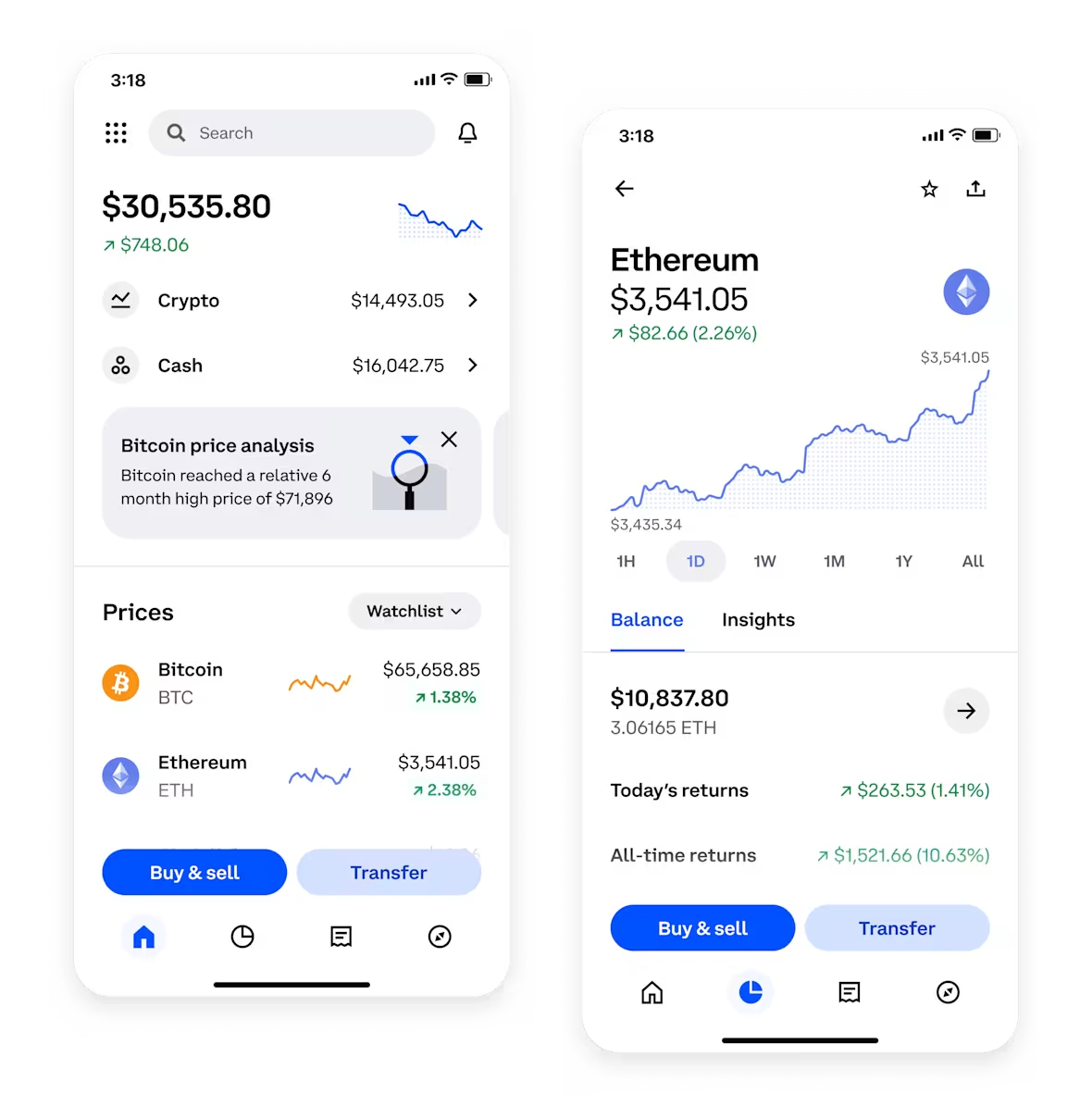

Binance Cloud Exchange is a white-label solution that allows businesses to launch their own digital asset trading platforms powered by Binance’s liquidity and security infrastructure. Understanding how to use this exchange can be critical for both end-users trading on a cloud-based platform and operators managing the exchange backend. This guide focuses on the user experience: how to access, navigate, and trade on a Binance Cloud-based exchange.
First, it is important to note that a Binance Cloud exchange is not Binance.com. It is a separate, independent platform operated by a third party, but it uses Binance’s matching engine, wallet system, and liquidity pool. To begin, you must visit the specific cloud exchange URL provided by the platform operator. There is no single "Binance Cloud" website. You will need to create a new account on that specific cloud exchange. This process typically requires an email address, a strong password, and identity verification (KYC) similar to the main Binance platform.
Once your account is verified and funded, the user interface will look very similar to Binance’s standard interface. The main dashboard usually displays a trading view, an order book, a price chart, and a market list. To start trading, you navigate to the "Exchange" or "Trade" section. Here, you can select a trading pair, such as BTC/USDT. The cloud exchange will display the current market depth and real-time price action. You can place a market order to buy or sell immediately at the current market price, or a limit order to set a specific price at which you want the trade to execute.
One of the key advantages of using a Binance Cloud exchange is the liquidity. Because the platform taps into Binance’s deep order books, you generally experience low slippage and fast order execution, even for larger trades. You can also set stop-limit orders for risk management, just like on the main Binance platform. To check your open orders, navigate to the "Open Orders" tab. For completed trades, review the "Order History" section. Withdrawals and deposits work similarly: you can find deposit addresses for supported cryptocurrencies and initiate withdrawals to external wallets.
Security is a major concern for any exchange user. Although the cloud exchange inherits Binance’s robust system, you should still enable two-factor authentication (2FA) immediately after account creation. Use the Google Authenticator app or SMS verification. Furthermore, ensure the website address is correct and that you are not on a phishing site. The cloud exchange should have a dedicated support team operated by the platform owner, but in many cases, basic technical support can also be routed through Binance’s API documentation. Finally, remember that the features available on a cloud exchange may differ slightly depending on the operator’s customization. Some may offer margin trading, futures, or staking, while others may only provide spot trading.
In conclusion, using a Binance Cloud exchange is a straightforward experience for anyone familiar with Binance’s standard interface. The core steps are: register on the specific cloud exchange URL, complete KYC, fund your account, and trade using the intuitive exchange interface. By following security best practices and understanding that liquidity is sourced from Binance, traders can efficiently use these platforms for spot and derivative trading.